Dobragem de chapa metálica plays a critical role in producing accurate, durable metal components for industrial equipment, electronic enclosures, automotive assemblies, and custom product housings. No entanto, even small bending errors can affect hole alignment, ajuste de montagem, and final product performance. Choosing the right fabrication partner helps you reduce these risks while controlling production costs and lead times.
Na VOK PRECISION TECHNOLOGY Co., LTDA, you can access integrated sheet metal fabrication services for prototypes and low-volume production. Our capabilities cover cutting, flexão, socando, soldagem, fascinante, perfuração, e acabamento superficial. We work with materials such as aluminum, aço inoxidável, cold-rolled steel, hot-rolled steel, aço galvanizado, cobre, and zinc to support different design and application requirements.
What Is Sheet Metal Bending?
Sheet metal bending is a forming process that applies force to a flat metal sheet to create an angle, flange, channel, bracket, or other three-dimensional shape without intentionally cutting through the material.
The bending method, material properties, grossura, and design geometry all influence the finished component. Portanto, your design should account for bend radius, springback, hole placement, and dimensional tolerances before fabrication begins.
Aplicações comuns incluem:
- Gabinetes eletrônicos: Forming panels, capas, mounting brackets, e caixas de equipamentos.
- Industrial equipment: Manufacturing support frames, protective covers, and machine brackets.
- Componentes automotivos: Producing mounting plates, structural brackets, and custom metal fittings.
- Automation systems: Fabricating sensor mounts, equipment panels, and custom fixtures.
- Desenvolvimento de protótipo: Testing metal part geometry and assembly compatibility before larger production runs.
VOK’s Sheet Metal Bending and Fabrication Capabilities
VOK combines sheet metal bending with complementary fabrication processes, allowing you to consolidate multiple manufacturing operations within one supplier relationship.
Material Selection for Custom Sheet Metal Parts
The right material depends on strength, resistência à corrosão, peso, aparência, e requisitos de fabricação.
| Material | Typical characteristics | Potential applications |
|---|---|---|
| Aluminum AL5052 | Leve, corrosion-resistant, formable | Gabinetes, capas, equipment panels |
| Aço inoxidável | Corrosion resistance and durability | Industrial housings, colchetes, components |
| Cold-rolled steel | Smooth surface and good formability | Cabinets, painéis, mounting parts |
| Hot-rolled steel | Suitable for various structural applications | Frames, supports, heavy-duty parts |
| Aço galvanizado | Zinc coating helps resist corrosion | Gabinetes, protective panels |
| Copper and zinc | Application-specific electrical or material properties | Custom conductive or specialty components |
Material suitability depends on the required thickness, bend geometry, ambiente, and finished-part specifications. VOK can evaluate your drawings and material requirements before production.
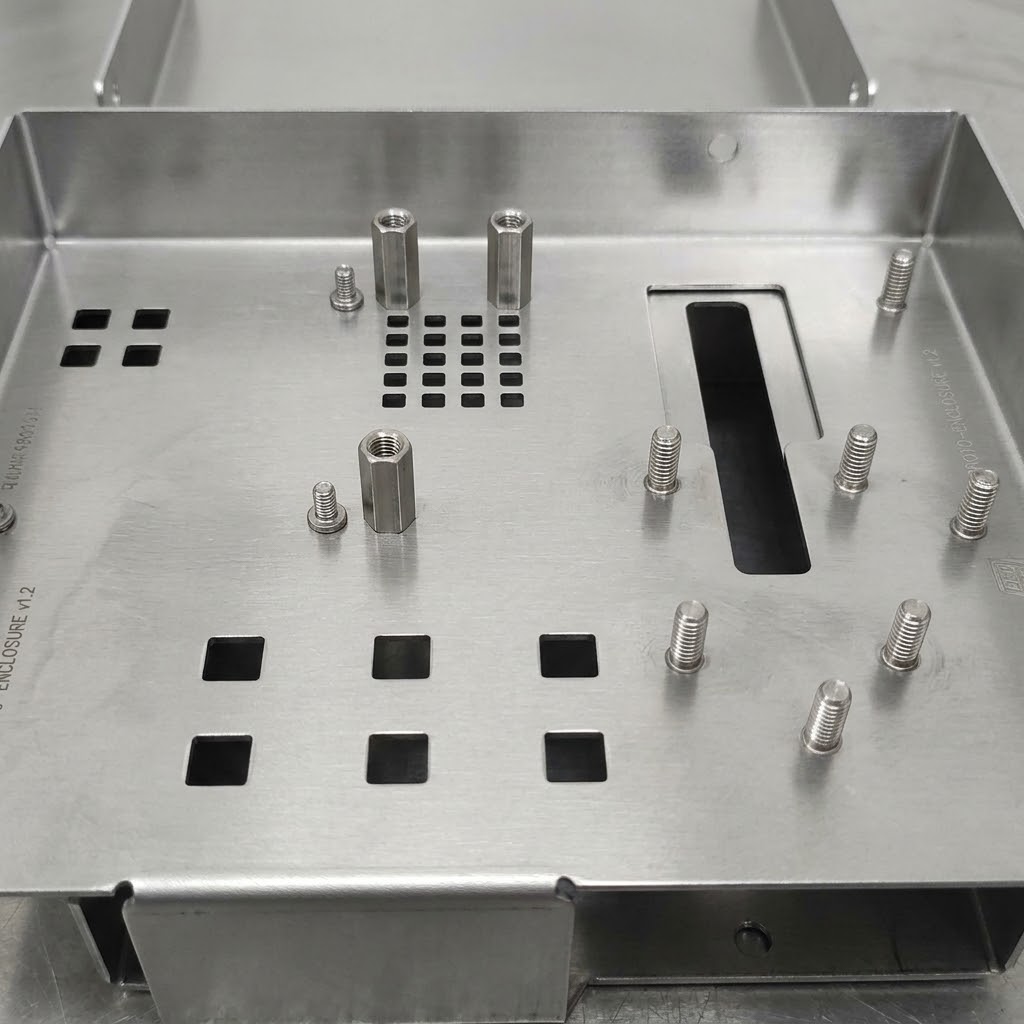
Integrated Processing and Surface Finishing
Beyond bending, VOK offers related fabrication operations to support complete sheet metal components.
- Corte a laser: Produces component outlines, slots, and openings according to your design.
- Perfuração e estampagem: Creates holes and formed features where the design and production volume justify the process.
- Soldagem: Laser welding supports precision joining, while TIG welding can provide strong, high-quality joints when properly executed.
- Soldagem a ponto: Joins selected sheet metal features with a localized heat-affected area.
- Riveting and fastening: Supports mechanical assembly, including PEM nuts and threaded features where specified.
- Acabamento de superfície: Options include painting, polimento, chapeamento, e revestimento em pó, depending on the material and application.
Combining these operations helps simplify production coordination. It also allows your engineering team to consider bending, joining, and finishing requirements together rather than treating each process as an isolated task.
How to Prepare a Sheet Metal Bending Project
A clear manufacturing brief helps reduce design revisions and speeds up quotation.
- Submit your design files. Provide 2D drawings, 3Arquivos CAD D, dimensões, and any critical tolerance requirements.
- Specify the material and thickness. Identify the preferred grade, sheet thickness, and any alternative materials you will accept.
- Define bending and assembly requirements. Mark bend angles, radii, hole positions, joining methods, and critical interfaces.
- Select the surface finish. Specify painting, polimento, chapeamento, powder coating, or other required treatments.
- Revise a capacidade de fabricação. Ask the engineering team to assess potential bending interference, springback, tooling access, and assembly risks.
- Confirm the production scope. Establish prototype quantities, expected order volumes, inspection requirements, and delivery expectations before production starts.
Para protótipos, prioritize critical dimensions and assembly fit. For repeat orders, documented specifications and consistent inspection criteria help maintain manufacturing consistency.
Laser Welding vs. TIG Welding for Sheet Metal Parts
Welding requirements often affect the strength, aparência, and dimensional stability of bent sheet metal assemblies. Your choice should reflect the joint design and final application.
| Comparison | Soldagem a laser | Soldagem TIG |
|---|---|---|
| Main advantage | Precise, fast joining with a localized heat input | Forte, high-quality welds with good process control |
| Heat effects | Generally limited when properly configured | Higher heat input can increase distortion risk |
| Key consideration | Requires suitable joint fit-up and process settings | Requires skilled operation and careful heat management |
| Typical selection factors | Precisão, velocidade, seam appearance | Joint strength, weld quality, material thickness |
Neither method is automatically suitable for every component. VOK can assess the material, joint geometry, requisitos de força, and appearance expectations when recommending a welding approach.
Perguntas frequentes
1. What materials can VOK use for sheet metal bending?
VOK lists AL5052 aluminum, aço inoxidável, cold-rolled steel, hot-rolled steel, aço galvanizado, cobre, and zinc among its typical materials. Final suitability depends on your component design and material specifications.
2. Can I order sheet metal prototypes before mass production?
Sim. VOK specializes in rapid prototyping, usinagem de precisão, e produção de baixo volume. You can use prototype parts to verify dimensions, ajuste de montagem, and functional requirements before deciding whether to increase production volume.
3. What information is needed for a sheet metal bending quotation?
Provide your CAD drawings, material grade, sheet thickness, order quantity, acabamento superficial, tolerâncias, e requisitos de entrega. Include welding, fascinante, or assembly details if your component needs additional processing.
Conclusão
Escolhendo o certo sheet metal bending partner helps you produce components that meet your design, conjunto, and functional requirements while managing fabrication complexity. TECNOLOGIA DE PRECISÃO VOK Co., LTD offers integrated sheet metal cutting, flexão, soldagem, fascinante, perfuração, and finishing for prototype and low-volume manufacturing projects. By reviewing your drawings, material specifications, and production goals early, you can identify potential manufacturing issues before they affect cost or delivery.
Start your sheet metal project with VOK. Send your 2D drawings or 3D CAD files, requisitos de materiais, target quantity, and finishing specifications to inquiry@vokmodel.com or call +86 18124139075 to discuss your project and request a quotation.