Quando você precisa de protótipos funcionais rapidamente, ferramentas tradicionais podem criar custos e atrasos desnecessários. Fundição a vácuo para prototipagem rápida oferece uma alternativa prática combinando moldes de silicone, materiais de poliuretano, e processamento de vácuo controlado. Você pode produzir peças de protótipo altamente detalhadas e pequenas tiragens de produção sem investir em moldes de injeção caros.
Na VOK PRECISION TECHNOLOGY Co., LTDA, você pode usar a fundição a vácuo como parte de um fluxo de trabalho de fabricação rápido mais amplo. Com 20+ anos de experiência no setor, 200+ funcionários, uma base de produção de 3.000㎡, e mais do que 5,000 projetos por ano, A VOK apoia engenheiros e desenvolvedores de produtos no setor automotivo, médico, aeroespacial, eletrônica, e aplicações de automação.
Por que usar fundição a vácuo para prototipagem rápida?
A fundição a vácuo funciona particularmente bem quando você precisa de mais do que um modelo visual. Pode reproduzir detalhes finos, texturas de superfície, e recursos funcionais de um modelo mestre, mantendo os custos de ferramentas relativamente baixos.
O processo utiliza um molde de silicone em vez de um molde de injeção convencional. Como resultado, você pode passar de um modelo mestre acabado para peças de protótipo em um ciclo de desenvolvimento muito mais curto.
Você pode se beneficiar da fundição a vácuo quando precisar:
- Protótipos funcionais para testes de produtos
- Produção de pequenos lotes antes da fabricação em massa
- Várias peças de protótipo com geometria consistente
- Diferentes propriedades de materiais ou acabamentos de superfície
- Formas complexas que requerem reprodução detalhada
- Menor investimento em ferramentas do que moldagem por injeção
Por exemplo, uma equipe de engenharia automotiva pode usar peças fundidas a vácuo para avaliar um componente interno antes de se comprometer com ferramentas de produção. De forma similar, uma empresa de eletrônicos pode produzir protótipos de gabinetes para montagem e testes de ajuste.
Como funciona a fundição a vácuo para prototipagem rápida
Um resultado confiável começa com um modelo mestre preciso e um processo controlado de fabricação de moldes. VOK combina impressão 3D ou usinagem CNC com fundição a vácuo para criar um fluxo de trabalho de protótipo prático.
Etapa 1: Crie o modelo mestre
Você primeiro precisa de um modelo mestre preciso. Dependendo do seu projeto e requisitos de tolerância, você pode criá-lo através de impressão 3D ou usinagem CNC.
O modelo mestre determina a precisão dimensional e os detalhes da superfície transferidos para o molde de silicone.
Etapa 2: Prepare o molde de silicone
Assim que o modelo mestre estiver concluído, VOK prepara o molde de silicone em torno do modelo. O molde deve capturar a geometria necessária e ao mesmo tempo permitir que a peça fundida acabada seja removida com segurança.
Este estágio é importante quando sua peça contém cortes inferiores, paredes finas, ou recursos complexos.
Etapa 3: Execute fundição a vácuo
O material de fundição selecionado é misturado e derramado no molde de silicone sob condições de vácuo. O processamento a vácuo ajuda a reduzir o ar preso e permite uma distribuição de material mais consistente.
Você também precisa controlar a mistura de materiais, temperatura, tempo de cura, e condições de vácuo para alcançar resultados estáveis.
Etapa 4: Remova e finalize a peça
Depois de curar, a peça fundida é removida do molde de silicone. A VOK pode então realizar o processamento final de acordo com os requisitos do seu projeto.
Dependendo da aplicação, você pode precisar de corte, acabamento superficial, pintura, ou outro pós-processamento antes de testar ou montar.
Fundição a vácuo vs.. Moldagem por injeção
Ambas as tecnologias podem produzir componentes plásticos, mas eles atendem a diferentes estágios de desenvolvimento de produto.
| Fator | Fundição a Vácuo | Moldagem por injeção |
|---|---|---|
| Ferramentas | Molde de silicone | Molde de produção |
| Custo inicial de ferramentas | Mais baixo | Mais alto |
| Velocidade de desenvolvimento | Rápido | Preparação de ferramentas mais longa |
| Volume de produção | Protótipos e pequenos lotes | Produção média a em massa |
| Validação de projeto | Excelente | Melhor para a produção final |
| Opções de materiais | ABS-, PC-, POM-, Opções tipo PP e elastômero | Materiais de amplo nível de produção |
| Melhor aplicação | Desenvolvimento e validação de produto | Fabricação em grande escala |
Portanto, a fundição a vácuo faz mais sentido quando você precisa validar um projeto antes de fazer um investimento significativo em ferramentas de produção.
Principais benefícios da fundição a vácuo VOK
VOK se concentra nos requisitos práticos que você enfrenta durante o desenvolvimento do produto: custo, velocidade, precisão, e seleção de materiais.
Precisão e detalhe
O processo de fundição a vácuo da VOK pode atingir uma tolerância declarada de aproximadamente ±0,20 mm por 100 milímetros, dependendo da geometria da peça, material, projeto de molde, e condições de processamento.
Isso torna o processo adequado para verificações dimensionais, avaliação de montagem, e teste de protótipo funcional.
Ferramentas de baixo custo
Os moldes de silicone geralmente requerem menos investimento inicial do que os moldes de injeção. Isto proporciona uma rota mais econômica quando seu projeto requer apenas um número limitado de peças.
É especialmente útil durante o estágio inicial de desenvolvimento, quando alterações de design ainda são possíveis.
Versatilidade de materiais
Você pode selecionar materiais com propriedades semelhantes aos plásticos e elastômeros comumente usados, incluindo opções semelhantes a:
- ABS
- PC
- POM
- PP
- Borracha
- Silicone
Esta flexibilidade permite avaliar diferentes características mecânicas e de aparência antes da produção final.
Retorno rápido
Os moldes de silicone normalmente podem ser preparados em poucos dias, dependendo da complexidade da peça e dos requisitos do projeto. Porque você evita ferramentas de produção convencionais, você pode encurtar o caminho desde o design do protótipo até a validação física.
Sobremoldagem de fundição a vácuo para protótipos complexos
Se o seu protótipo combina diferentes materiais ou componentes, sobremoldagem de fundição a vácuo pode fornecer outra opção útil.
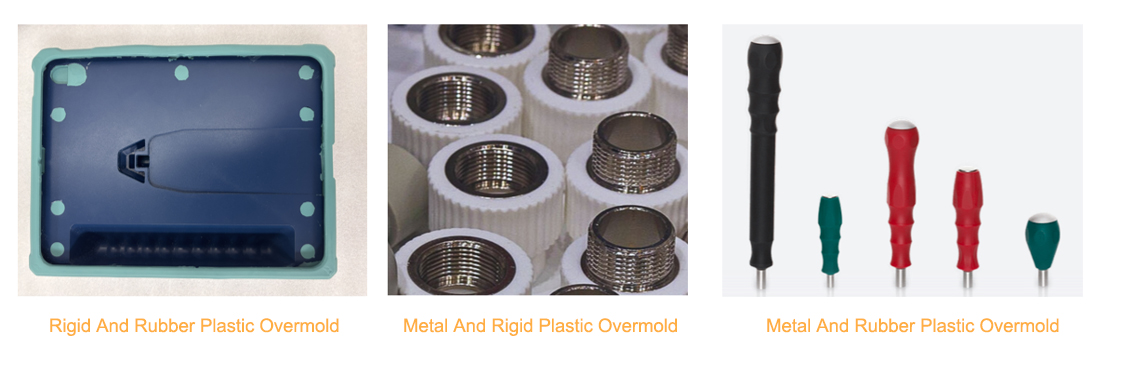
VOK suporta diversas configurações de sobremoldagem, incluindo:
- Sobremoldagem de plástico rígido e borracha
- Sobremoldagem de metal e plástico rígido
- Sobremoldagem de metal e borracha plástica
- Inserir sobremoldagem
Por exemplo, você pode precisar de uma caixa rígida com uma alça de borracha macia para um produto eletrônico portátil. Em vez de testar os componentes separadamente, a sobremoldagem permite avaliar sua interação como uma montagem de protótipo.
Por que escolher VOK para prototipagem rápida?
TECNOLOGIA DE PRECISÃO VOK Co., LTD concluiu dezenas de milhares de projetos por mais de 1,000 clientes globais. Suas capacidades de fabricação cobrem usinagem CNC, Torneamento CNC, 3Impressão D, fabricação de chapas metálicas, fundição a vácuo, ferramentas rápidas, e moldagem por injeção.
Esse recurso integrado significa que você pode alternar entre os processos de fabricação à medida que seu projeto se desenvolve. A VOK também mantém certificação documentada e práticas de controle de qualidade, com informações de certificação disponíveis através dos recursos da empresa.
Perguntas frequentes
A fundição a vácuo é adequada para produção de pequenos lotes??
Sim. A fundição a vácuo é particularmente útil quando você precisa de uma quantidade limitada de peças funcionais antes de passar para a produção em massa. As ferramentas de silicone mantêm o investimento inicial menor do que a moldagem por injeção convencional.
Quais materiais podem ser usados para fundição a vácuo?
As opções comuns incluem materiais de poliuretano projetados para simular ABS, PC, POM, PP, borracha, e propriedades semelhantes ao silicone. Sua escolha de material deve depender da resistência necessária, flexibilidade, aparência, e aplicação.
Quão precisas são as peças fundidas a vácuo?
VOK especifica uma tolerância de aproximadamente ±0,20 mm por 100 milímetros. Os resultados reais dependem do tamanho da peça, geometria, projeto de molde, características materiais, e controle de processo.
Conclusão
Quando você precisa de peças detalhadas sem o custo e o prazo de entrega das ferramentas de produção, fundição a vácuo para prototipagem rápida fornece um caminho prático desde a validação do projeto até a fabricação de pequenos lotes. Com materiais flexíveis, ferramentas de silicone, preparação rápida do molde, e aproximadamente ±0,20 mm por 100 mm tolerância declarada, você pode testar o ajuste, função, aparência, e montagem antes de se comprometer com a produção em massa. TECNOLOGIA DE PRECISÃO VOK Co., LTD combina fundição a vácuo com usinagem CNC, 3Impressão D, fabricação de chapas metálicas, ferramentas rápidas, e moldagem por injeção, oferecendo a você um parceiro de fabricação completo para desenvolvimento de protótipos.
CTA
Enviar VOK seu arquivo CAD 3D, desenhos, quantidade necessária, preferência material, e detalhes do aplicativo. A equipe pode analisar seus requisitos e recomendar um serviço de fundição a vácuo adequado para seu protótipo ou projeto de produção de baixo volume.