When your product design needs physical validation, waiting weeks for tooling can slow development and increase costs. Rapid Prototyping with 3D printing gives you a faster way to turn CAD data into functional prototypes, test parts, and small-batch components. VOK Precision Technology Co., Ltd. provides professional 3D printing services using SLA, SLS, and metal printing technologies.
With more than 20 years of industry experience, 200+ staff, a 3,000 m² production base, and 5,000+ projects completed annually, VOK supports engineers and product teams from concept validation through prototype testing. You can choose different printing technologies and materials according to your required accuracy, strength, surface quality, and application.
Why Choose 3D Printing for Rapid Prototyping?
Traditional tooling can become expensive when your design is still changing. By comparison, 3D printing for rapid prototyping lets you produce physical parts directly from digital designs without first investing in conventional molds.
This approach works particularly well when you need to:
- Validate product dimensions and assembly
- Test the form and appearance of a new design
- Check functional performance before mass production
- Produce customized components in small quantities
- Reduce development time between design iterations
- Evaluate different materials and structures
For example, you can modify a CAD model, print a new prototype, test it, and then make another design revision without rebuilding a production mold.
Rapid Prototyping Technologies Available at VOK
VOK supports several 3D printing processes, allowing you to select the most suitable technology for your prototype.
SLA Prototyping for High-Precision Parts
SLA is suitable when you need fine details, smooth surfaces, and accurate visual prototypes. VOK’s SLA service supports materials similar to ABS and GP60 resin materials.
Key specifications include:
- Maximum size: 600 × 600 × 350 mm
- Tolerance: ±0.05 mm
- Material options: ABS-like materials, GP60 and various resins
- Key advantages: High precision and smooth surface quality
You can use SLA prototypes for product appearance checks, housing validation, design reviews, and other applications where surface quality matters.
SLS Prototyping for Functional Components
SLS offers a practical option when your prototype needs stronger mechanical performance. VOK uses materials including PA12, PA12 + GF, and PA + MF.
Its specifications include:
- Maximum size: 410 × 350 × 350 mm
- Tolerance: ±0.1 mm
- Key advantages: Excellent mechanical properties
- Typical applications: Functional parts and engineering prototypes
Therefore, SLS can be a good choice when you need to test a component under more realistic operating conditions.
Metal 3D Printing for Engineering Prototypes
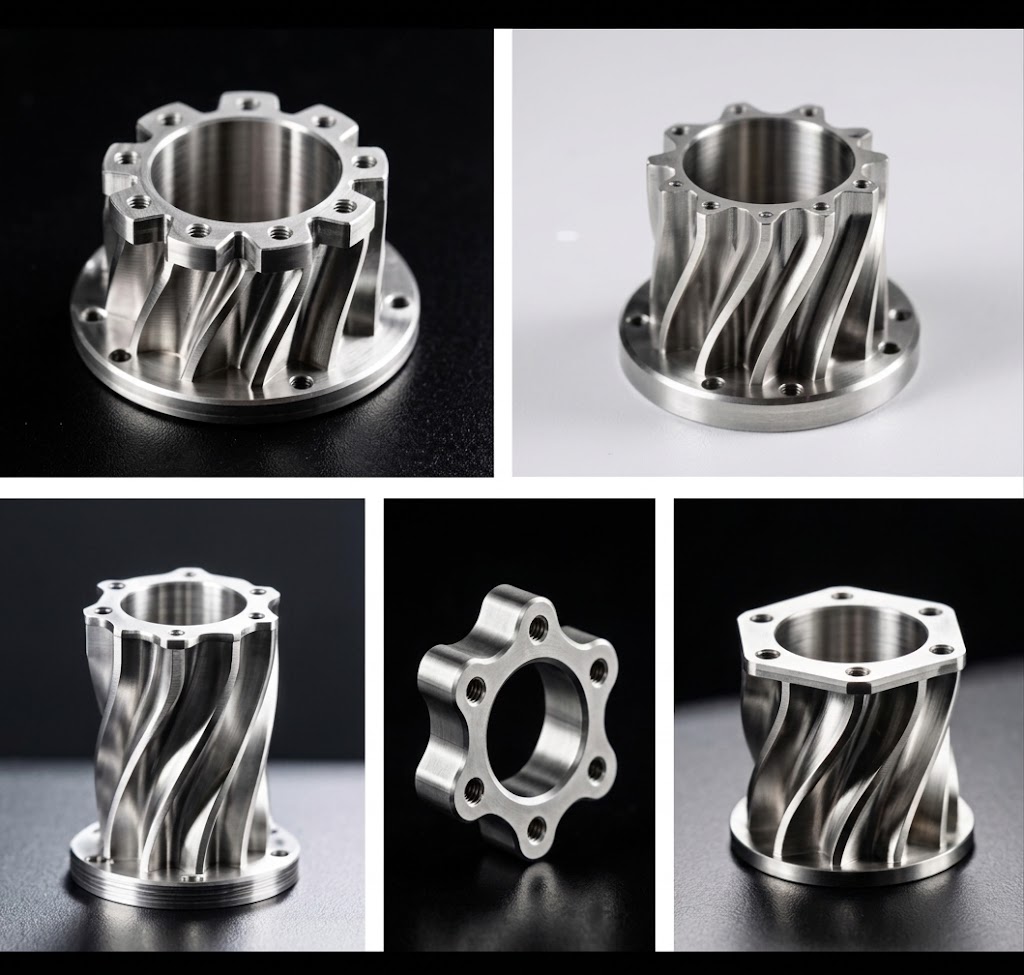
When plastic materials cannot meet your requirements, VOK also provides metal 3D printing. Available materials include AL6061, AlSi10Mg, TC4, GH3625, 17-4PH, 316L, and 18Ni300.
Typical specifications include:
- Surface roughness: Ra 6.3–7
- Tolerance: 0.2–0.4 mm
- Advantages: Integrated molding, lightweight structures, and rapid prototyping
Metal printing can support engineering development where you need a metal prototype to evaluate structure, weight, fit, or functional characteristics.
3D Printing Technology Comparison
Choosing the right process depends on what you need to test. The following comparison can help you make an initial decision.
| Technology | Typical Materials | Tolerance | Main Advantage | Suitable Applications |
|---|---|---|---|---|
| SLA | ABS-like resin, GP60 | ±0.05 mm | High precision, smooth surface | Appearance models, detailed prototypes |
| SLS | PA12, PA12+GF, PA+MF | ±0.1 mm | Strong mechanical properties | Functional parts, engineering prototypes |
| Metal Printing | AL6061, AlSi10Mg, TC4, 316L | 0.2–0.4 mm | Integrated metal structures | Metal prototypes, lightweight components |
The right process depends on your design requirements rather than simply choosing the lowest-cost option. VOK can help you evaluate the material, dimensions, tolerance, and intended application before production.
How the Rapid Prototyping Process Works
You can move from a digital concept to a physical prototype through a straightforward workflow:
- Submit your CAD design
Provide your 3D model and technical requirements for review. - Define your prototype requirements
Confirm dimensions, material, tolerance, surface requirements, quantity, and application. - Select the printing technology
Choose SLA, SLS, or metal 3D printing according to your functional and visual requirements. - Prototype production
VOK processes your design using the selected manufacturing technology and material. - Inspect and test the parts
Check dimensions, fit, surface quality, assembly, and functional performance based on your project requirements. - Revise and manufacture again if needed
If testing identifies design changes, you can update the CAD model and produce another prototype iteration.
This workflow helps you identify design problems earlier, before committing to higher-volume manufacturing.
Quality, Experience, and Production Capability
For prototype projects, technical capability alone is not enough. You also need consistent communication, production control, and quality documentation.
VOK Precision Technology Co., Ltd. has:
- 20+ years of industry experience
- 200+ staff
- 3,000 m² production base
- 5,000+ projects per year
- 1,000+ global clients
- Experience serving automotive, medical, aerospace, electronics, and automation industries
- Certification documentation available for quality and compliance verification
VOK has developed long-term partnerships with customers across Europe, North America, and Asia-Pacific. This international project experience allows the team to understand different engineering requirements and support prototype development for a wide range of applications.
When Should You Use 3D Printing for Rapid Prototyping?
3D printing is particularly useful when your design is still evolving or when you need physical validation before production tooling.
Consider it when you need:
- A prototype for product design review
- Multiple design iterations
- A functional prototype for testing
- A customized part in a small quantity
- A metal prototype without conventional tooling
- A detailed visual model for presentation or assembly testing
If your project requires hundreds or thousands of identical parts, however, you may eventually benefit from injection molding or another production process. VOK also provides CNC machining, sheet metal fabrication, vacuum casting, rapid tooling, and injection molding, so you can transition to another manufacturing method when your project moves beyond prototyping.
FAQ
What is the best 3D printing technology for rapid prototyping?
There is no single process for every application. SLA is suitable for high-detail prototypes and smooth surfaces, SLS works well for functional plastic parts, while metal 3D printing is appropriate when you need metal materials and complex integrated structures.
How accurate is VOK’s 3D printing service?
Accuracy depends on the selected technology and material. VOK’s stated SLA tolerance is ±0.05 mm, SLS tolerance is ±0.1 mm, while metal printing tolerance is approximately 0.2–0.4 mm.
Can 3D printing be used for small-batch manufacturing?
Yes. 3D printing can be suitable for low-volume production when tooling costs, design changes, or customized parts make conventional manufacturing less practical. The appropriate process depends on quantity, material, geometry, and performance requirements.
Conclusion
The right prototype can help you identify design issues before they become expensive production problems. With SLA, SLS, and metal printing options, VOK Precision Technology Co., Ltd. provides flexible Rapid Prototyping solutions for product development, functional testing, engineering validation, and small-batch manufacturing. With 20+ years of experience, 1,000+ global clients, and 5,000+ projects per year, VOK can support your prototype from CAD data to finished parts.
CTA
Send your 3D CAD file, required material, quantity, dimensions, and application requirements to VOK for a project assessment and suitable 3D printing process recommendation.