When you need to validate a product design before committing to expensive tooling, choosing the right rapid prototyping service can help you reduce development risks and move from concept to testing more efficiently. However, different projects require different materials, dimensional accuracy, surface finishes, and mechanical properties. Selecting an unsuitable 3D printing process may lead to unnecessary revisions or prototypes that fail to represent the intended application.
VOK PRECISION TECHNOLOGY Co., LTD provides professional 3D printing services for product development, functional testing, and small-batch manufacturing. With SLA, SLS, and metal 3D printing capabilities, VOK helps you select a suitable process based on your design requirements. Whether you need a smooth visual model, a functional plastic component, or a metal prototype, understanding the available technologies will help you make a more informed manufacturing decision.
What Does a Rapid Prototyping Service Include?
A professional rapid prototyping service converts your digital design into a physical part that you can inspect, test, and refine. Compared with moving directly to mass production, prototyping allows you to identify design issues before investing in production tooling.
VOK offers several manufacturing processes, including 3D printing, CNC machining, sheet metal fabrication, urethane casting, and injection molding. For 3D printing projects, the most suitable technology depends on your part geometry, material requirements, intended use, and target dimensions.
Typical applications include:
- Product development: Evaluate shape, assembly, and ergonomics before finalizing a design.
- Functional testing: Check fit, component interaction, and selected mechanical properties.
- Engineering validation: Identify dimensional or structural issues before production.
- Small-batch production: Manufacture limited quantities when conventional tooling is unnecessary.
- Design presentations: Create physical models for internal reviews and customer demonstrations.
Compare SLA, SLS, and Metal 3D Printing
Choosing the right process helps you balance surface quality, mechanical performance, dimensional requirements, and production costs. VOK provides several 3D printing options for different prototype requirements.
| Process | Available materials | Maximum part size | Stated tolerance | Suitable applications |
|---|---|---|---|---|
| SLA | ABS-like resin, GP60 | 600 × 600 × 350 mm | ±0.05 mm | Detailed visual models and smooth-surface prototypes |
| SLS | PA12, PA12+GF, PA+MF | 410 × 350 × 350 mm | ±0.1 mm | Functional plastic parts and engineering prototypes |
| Metal 3D printing | AlSi10Mg, TC4, GH3625, 17-4PH, 316L and other listed grades | Confirm with VOK | 0.2–0.4 mm | Lightweight structures and metal prototype components |
Specifications are based on the supplied VOK product information. Actual achievable tolerances depend on part geometry, material, orientation, and post-processing. Confirm material availability and project-specific limits before ordering.
SLA 3D Printing for Detailed Prototypes
Stereolithography (SLA) uses light to cure liquid photosensitive resin. It suits projects that require fine details and a smooth surface, particularly when appearance and dimensional features matter during design evaluation.
VOK lists a maximum build size of 600 × 600 × 350 mm and a stated tolerance of ±0.05 mm for its SLA offering. You can consider this process for product housings, presentation models, and prototypes that need visual inspection. If your part will experience repeated loading, heat, or chemical exposure, confirm the resin’s properties before selecting it for functional testing.
SLS 3D Printing for Functional Parts
Selective laser sintering (SLS) fuses polymer powder to create three-dimensional parts. VOK lists PA12, PA12+GF, and PA+MF among its available materials, with a maximum build size of 410 × 350 × 350 mm and a stated tolerance of ±0.1 mm.
SLS is worth considering when you need functional prototypes, complex geometries, or parts for assembly evaluation. Before production, discuss the required strength, flexibility, environmental conditions, and surface finish with your manufacturing partner.
Metal 3D Printing for Engineering Applications
Metal 3D printing supports prototype development when your design calls for metallic materials or complex geometries. VOK lists materials including AlSi10Mg, TC4, GH3625, 17-4PH, and 316L, with a stated tolerance range of 0.2–0.4 mm and surface roughness of Ra 6.3–7.
Potential applications include lightweight structural components, equipment parts, and engineering prototypes. However, metal printing does not automatically guarantee a finished part’s mechanical properties or dimensional accuracy. Ask about heat treatment, machining allowances, inspection methods, and material documentation when these factors affect your design.
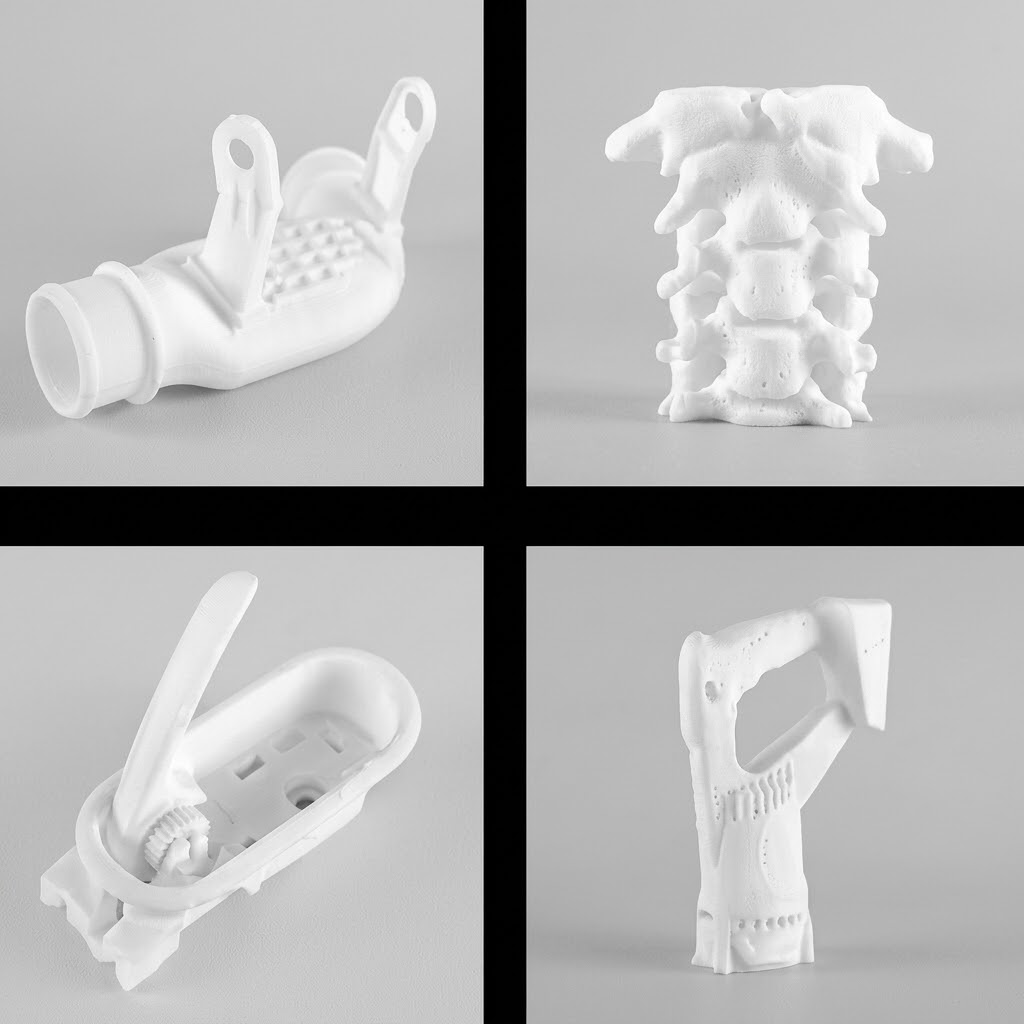
How to Choose the Right 3D Printing Process
Follow these steps to make your rapid prototyping project more efficient.
- Define your objective. Decide whether you need a visual model, assembly sample, functional prototype, or limited production run.
- Prepare your design files. Provide a suitable 3D CAD file and identify critical dimensions, holes, threads, and mating surfaces.
- Specify material requirements. Explain expected loads, operating temperatures, chemical exposure, and other environmental conditions.
- Confirm manufacturing specifications. Review maximum dimensions, tolerances, surface finish, and any required post-processing.
- Request a quotation. Share the part quantity, drawings, material preferences, and delivery expectations so the supplier can assess the project.
- Inspect and validate the prototype. Check critical dimensions, assembly fit, appearance, and functional performance before approving the next stage.
Providing complete requirements at the beginning helps your supplier identify potential manufacturing constraints and reduce avoidable design revisions.
Why Work with VOK for Rapid Prototyping?
VOK PRECISION TECHNOLOGY Co., LTD specializes in rapid prototyping, precision machining, and low-volume production. The company reports more than 1,000 global clients, tens of thousands of completed projects, over 5,000 projects per year, and a 3,000 m² production base.
Its manufacturing services cover multiple processes, allowing you to discuss prototype development and subsequent manufacturing needs with one supplier. VOK serves customers across Europe, North America, and Asia-Pacific, with experience supporting automotive, medical, aerospace, electronics, and automation projects.
When evaluating a supplier, consider more than the quoted price. Ask about process suitability, material traceability, inspection procedures, dimensional reporting, and quality certifications relevant to your application. VOK’s available certifications and project-specific inspection capabilities should be confirmed directly if your industry requires documented compliance.
FAQ
1. How do I choose between SLA and SLS prototyping?
Choose SLA when smooth surfaces and fine visual details are priorities. Consider SLS when you need functional plastic parts or complex geometries. Your operating conditions and material requirements should determine the final choice.
2. Can 3D printing support small-batch production?
Yes. 3D printing can produce limited quantities without conventional injection molds, making it useful for pilot runs, design validation, and early market testing. The most economical process depends on part complexity, quantity, material, and finishing requirements.
3. What information should I provide when requesting a quote?
Provide your 3D CAD files, required quantity, material preferences, critical dimensions, tolerance requirements, surface finish, and target delivery date. If the prototype must meet specific performance or compliance requirements, include those details in your initial inquiry.
Conclusion
Selecting the right rapid prototyping service helps you evaluate designs, verify component fit, and identify manufacturing issues before scaling production. By comparing SLA, SLS, and metal 3D printing against your project’s material, dimensional, and functional requirements, you can choose a more appropriate path from concept to validated prototype. VOK PRECISION TECHNOLOGY Co., LTD offers multiple prototyping and manufacturing processes to support your development needs.
Ready to develop your next prototype? Send VOK your CAD files, target quantity, material requirements, and critical tolerances at inquiry@vokmodel.com or call +86 18124139075. Request a project-specific quotation and confirm the recommended process, achievable specifications, and delivery schedule before production.