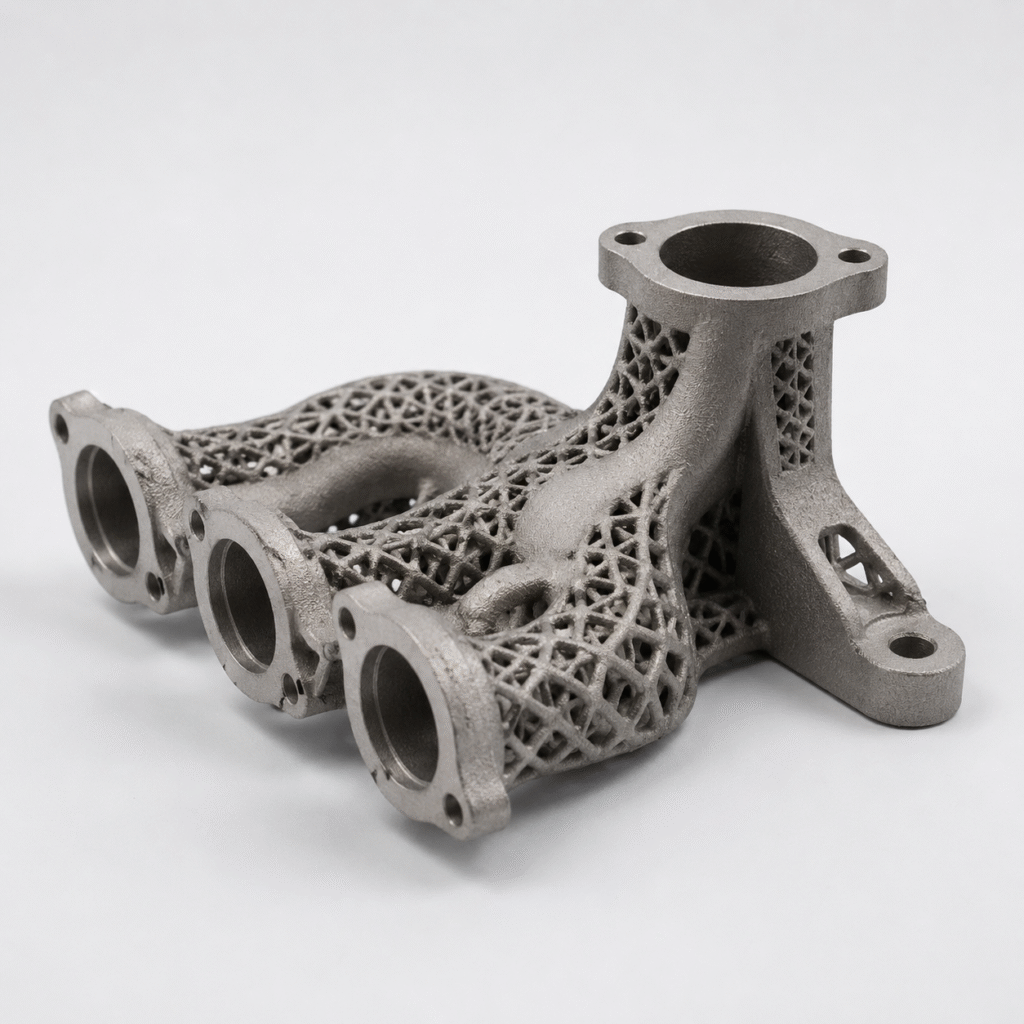
Os engenheiros de projeto hoje têm a tarefa de fornecer componentes cada vez mais sofisticados e mais leves, mais forte, e mais compacto, tudo isso ao mesmo tempo em que cumpre cronogramas de desenvolvimento apertados. No entanto, muitos projetos introduzem complexidades que os métodos convencionais de fabricação lutam para lidar. Canais de fluxo interno, estruturas treliçadas, e geometrias otimizadas para topologia podem ser desafiadoras, caro, ou mesmo impossível de produzir usando usinagem CNC, fundição, ou moldagem por injeção. Em tais casos, utilizando um metal profissional 3Serviço de impressão D oferece uma alternativa prática. Em vez de redesenhar peças para atender às limitações de produção, os engenheiros podem manter os objetivos de desempenho enquanto aproveitam processos avançados de fusão em leito de pó para gerenciar a complexidade geométrica. Na VOK PRECISÃO, essas tecnologias transformam arquivos CAD digitais em componentes totalmente funcionais com composições químicas certificadas e integridade estrutural consistente. Desde soluções de prototipagem metálica de precisão rápida até execuções de produção de baixo volume, esta metodologia ágil encurta os ciclos de desenvolvimento, elimina custos iniciais com ferramentas, e reduz o desperdício de material.
Superando os limites da fabricação tradicional
Os métodos industriais tradicionais impõem restrições inerentes que podem retardar o lançamento de produtos, inflacionar custos, e complicar a iteração do design.
d Prazos de entrega: Produzindo moldes, morre, e acessórios personalizados adicionam semanas ou meses aos cronogramas. Revisões de projeto geram ajustes caros e mais atrasos.
Desperdício de Materiais: A usinagem de peças complexas a partir de tarugos sólidos remove material substancial, particularmente caro ao usar metais de alto valor, como titânio ou ligas de níquel.
A manufatura aditiva aborda essas limitações construindo peças camada por camada, convertendo projetos complexos diretamente em componentes físicos sem ferramentas especializadas.
Avaliando Fornecedores para Componentes de Alta Tensão
Embora a fabricação aditiva expanda as possibilidades de design, o resultado depende das capacidades do fornecedor. As especificações da máquina por si só não garantem a qualidade. Estabilidade do processo, controle de materiais, e procedimentos de inspeção afetam o desempenho dos componentes.
Antes de contratar um parceiro de produção, as equipes devem avaliar:
Densidade da peça e integridade mecânica
Componentes de alta tensão requerem porosidade interna mínima para evitar falhas por fadiga. Os principais fornecedores alcançam densidades estruturais de 98 a 99% ou mais e otimizam as propriedades mecânicas por meio de tratamento térmico pós-construção preciso, garantindo resistência à tração certificada, limites de rendimento, e alongamento.
Controle de qualidade interno
A precisão dimensional por si só é insuficiente. Fornecedores de primeira linha mantêm laboratórios totalmente equipados para verificar:
- Tolerâncias espaciais via medição de coordenadas
- Rugosidade superficial e qualidade de acabamento
- Testes não destrutivos para consistência interna
- Espessura do revestimento e verificação de ajuste de montagem
Estas medidas garantem que as peças atendam às especificações antes de saírem da instalação.
Seleção de materiais para desempenho no mundo real
Depois de confirmar a confiabilidade do processo, a escolha do material torna-se crítica. As ligas diferem no comportamento mecânico, tolerância térmica, e resistência à corrosão, influenciando o desempenho a longo prazo.
| Categoria de liga | Grau da indústria | Resistência à tração conforme construída | Resistência à tração tratada termicamente | Dureza Pós-Calor |
| Aço inoxidável | 316eu | $\ge $ 660 MPa | $\ge $ 660 MPa | 13-15 CDH |
| Aço inoxidável | 17-4PH | $\ge $ 1100 MPa | $\ge $ 1250 MPa | 32-42 CDH |
| Mofo / Aço para ferramentas | 18Ni300 | $\ge $ 1090 MPa | $\ge $ 1930 MPa | 48-52 CDH |
| Liga de titânio | TC4 (Nota 5) | $\ge $ 600 MPa | $\ge $ 1150 MPa | 35-40 CDH |
| Liga de alumínio | AlSi10Mg | $\ge $ 330 MPa | $\ge $ 310 MPa | 90-120 HB |
| Liga de alumínio | 6061 | $\ge $ 280 MPa | $\ge $ 290 MPa | 95-120 HB |
| Superliga de Níquel | GH3625 | $\ge $ 1000 MPa | $\ge $ 1050 MPa | 455 HB |
| Superliga de Níquel | GH4169 | $\ge $ 980 MPa | $\ge $ 1450 MPa | 455 HB |
Aplicações em todos os setores
A fabricação aditiva de metal agora serve como principal ferramenta de produção em setores de alta consequência:
Dispositivos Médicos: Implantes específicos do paciente, guias cirúrgicas, e estruturas protéticas leves usando titânio biocompatível TC4.
Aeroespacial: Colchetes leves, bicos de combustível, e dutos que reduzem o peso da aeronave sem comprometer a integridade estrutural.
Automotivo: Protótipos de alto estresse, coletores de admissão, e blocos de resfriamento produzidos rapidamente para testes funcionais.
Automação Industrial: Ferramentas personalizadas de ponta de braço e componentes robóticos otimizados para relações resistência/peso, permitindo tempos de ciclo mais rápidos.
Comparando a Fabricação Aditiva com Métodos Convencionais
Usinagem CNC: Ideal para geometrias simples com tolerâncias restritas e acabamentos polidos, mas a eficiência cai para redes internas ou formas complexas.
Fundição & Ferramentas: Econômico em escala, mas requer ferramentas caras e longos prazos de entrega. Revisões de design geralmente significam reiniciar o processo, que a fabricação aditiva evita.
A manufatura aditiva permite o desenvolvimento iterativo, produção de baixo volume, e fabricação de geometria complexa sem altos custos iniciais.
Conclusão
A fabricação aditiva de metal transforma o fluxo de trabalho de engenharia ao remover as restrições tradicionais de produção, permitindo que as equipes se concentrem no desempenho dos componentes, otimização de peso, e implantação acelerada em campo.
Parceria com um profissional tecnicamente competente 3Serviço de impressão D oferece mais do que capacidade de laser: oferece experiência metalúrgica, rigoroso controle de qualidade interno, e desempenho mecânico reproduzível desde os protótipos iniciais até a produção em grande escala.
Na VOK PRECISÃO, nossas plataformas de produção multilaser e infraestrutura abrangente de controle de qualidade garantem que projetos CAD complexos se traduzam em densos, componentes metálicos de alto desempenho. A integração desses fluxos de trabalho aditivos comprime os cronogramas de prototipagem, reduz custos com ferramentas, minimiza o desperdício de materiais, e ajuda a colocar produtos essenciais no mercado com mais rapidez.