When you need functional prototypes without the upfront cost of injection mold tooling, choosing the right manufacturing process can be challenging. Rapid Prototyping China services offer several options, but the best choice depends on your part geometry, material requirements, production volume, and development schedule. Urethane casting, also known as vacuum casting, is particularly useful when you need detailed plastic parts in small quantities before committing to mass production.
VOK PRECISION TECHNOLOGY Co., LTD specializes in rapid prototyping, precision machining, and low-volume manufacturing. With more than 1,000 global clients and tens of thousands of completed projects, VOK supports engineers and product developers working across automotive, medical, aerospace, electronics, and automation applications. Its urethane casting service helps you evaluate product designs, test part functionality, and produce small batches using silicone molds.
What Is Urethane Casting in Rapid Prototyping?
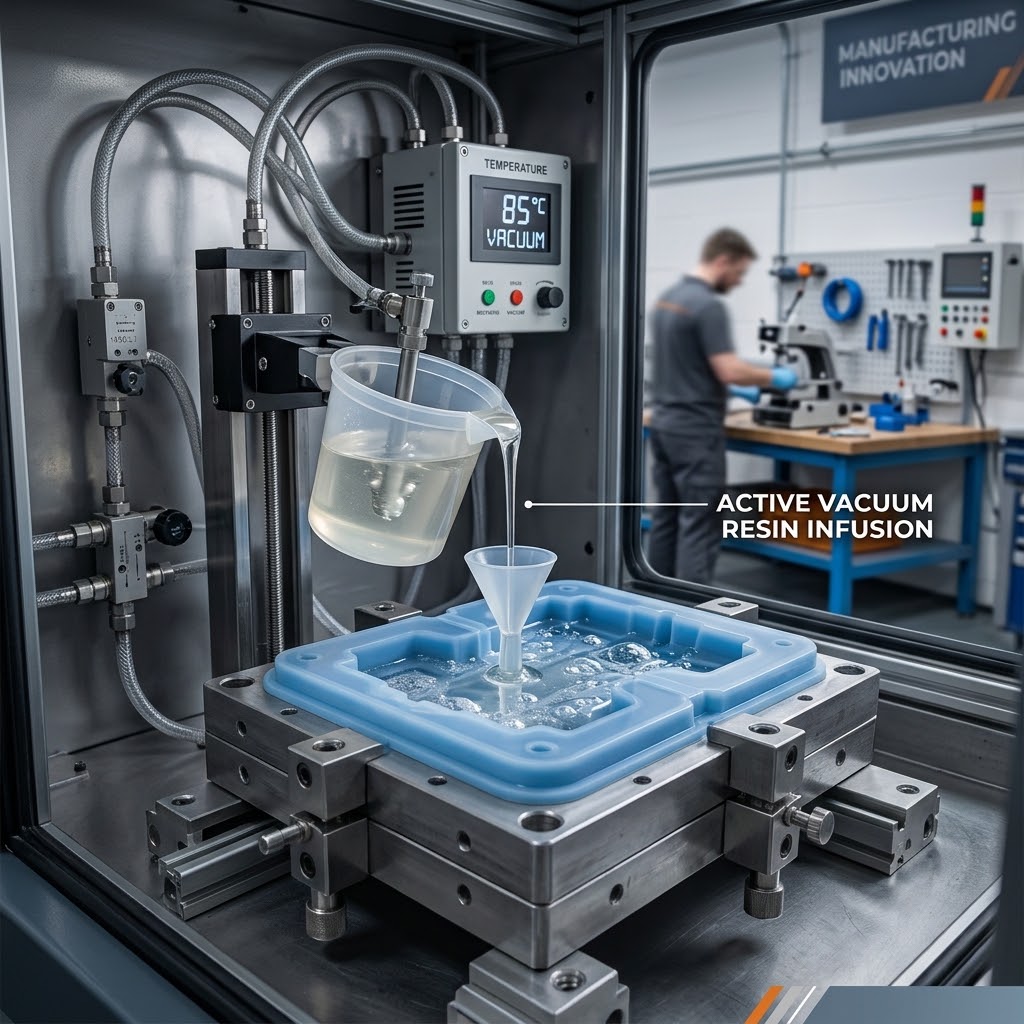
Urethane casting is a manufacturing process that uses a master model and a silicone mold to produce prototype parts, typically from polyurethane casting resins. Manufacturers place the prepared resin into the mold under vacuum conditions to reduce trapped air and improve the quality of the finished component.
Unlike injection molding, which generally requires dedicated production tooling, vacuum casting uses silicone molds that are typically faster and less expensive to prepare. This makes the process suitable for design validation, appearance models, functional prototypes, and limited production runs.
Key Benefits of Vacuum Casting
-
Lower tooling investment: Silicone molds can reduce initial tooling costs for small production quantities.
-
Detailed reproduction: The mold can reproduce surface textures and fine design features from the master model.
-
Material flexibility: Depending on the resin selected, parts can simulate properties associated with ABS, polypropylene, polycarbonate, or rubber-like materials.
-
Shorter development cycles: Vacuum casting allows you to produce parts without waiting for conventional injection mold tooling.
-
Overmolding options: Multiple materials or components can be combined in suitable casting processes to create rigid-and-soft assemblies.
Actual lead times, tolerances, and material properties depend on part geometry, resin selection, mold design, and project requirements.
How VOK Produces Vacuum Casting Parts
VOK follows a structured workflow to turn your design into physical prototype components.
-
Master model creation: The team prepares a master model using 3D printing or CNC machining, depending on the required geometry and surface quality.
-
Silicone mold preparation: The master model is used to create a silicone mold. Mold design, parting lines, and release requirements are considered before casting.
-
Vacuum casting: The selected resin is mixed and poured into the mold under vacuum conditions. Appropriate curing time and temperature help the material develop its intended properties.
-
Demolding and finishing: After curing, the part is removed from the mold, inspected, and finished as required.
Before production begins, provide your 3D files, target quantity, material requirements, and critical dimensions. This information helps VOK assess the manufacturing approach and identify potential design adjustments.
Vacuum Casting vs. Injection Molding
Both processes can produce plastic components, but they serve different manufacturing needs. The following comparison can help you select a suitable method.
|
Comparison factor |
Vacuum casting | Injection molding |
|---|---|---|
|
Tooling |
Silicone molds | Production molds, commonly metal |
|
Initial investment |
Generally lower | Generally higher |
|
Best-fit volume |
Prototypes and small batches |
Medium- to high-volume production, depending on tooling economics |
| Design changes | Often easier to implement during early development |
Mold changes may require additional machining |
| Material options | Casting resins and suitable elastomeric materials |
Thermoplastics and other compatible molding materials |
| Typical applications | Appearance models, functional prototypes, limited runs |
Repeatable production parts at scale |
If you need a few dozen prototype components to evaluate fit, appearance, or assembly, vacuum casting may be a practical choice. If demand increases substantially and the design becomes stable, injection molding may offer better unit economics. The most suitable process depends on your required quantity, resin properties, dimensional requirements, and total project budget.
Vacuum Casting Overmolding for Multi-Material Parts
Some products require more than one material in a single assembly. Vacuum casting overmolding can help you develop these components by combining compatible materials or incorporating inserts during a multi-step casting process.
VOK offers several overmolding configurations, including:
-
Rigid plastic overmolded with rubber-like material
-
Metal inserts combined with rigid plastic
-
Metal inserts combined with rubber-like plastic
-
Insert overmolding for selected component designs
These approaches can support product development when you need grip surfaces, protective layers, integrated inserts, or different material characteristics within one part. However, material compatibility, bonding strength, geometry, and the intended operating environment should be evaluated before production.
How to Choose a Rapid Prototyping Manufacturer in China
When comparing a Rapid Prototyping China supplier, look beyond the quoted unit price. Review the manufacturer’s process capabilities, engineering support, communication, and ability to move from prototype development to repeatable production.
Consider these factors before placing an order:
-
Manufacturing capabilities: Confirm whether the supplier offers vacuum casting alongside CNC machining, 3D printing, and other relevant processes.
-
Material suitability: Request material data and verify whether the selected resin meets your mechanical, thermal, and appearance requirements.
-
Dimensional control: Identify critical dimensions and confirm the inspection method and achievable tolerance for your specific part.
-
Production planning: Discuss sample approval, batch quantities, finishing requirements, and expected lead times.
-
Quality documentation: Ask what inspection records, material documentation, and quality certificates are available for your project.
VOK reports more than 1,000 global clients, over 5,000 projects per year, and a 3,000-square-meter production base. These company-provided figures offer useful background when evaluating its manufacturing capacity; you should still confirm project-specific quality requirements and delivery commitments before ordering.
FAQ
1. How many parts can vacuum casting produce?
Vacuum casting is commonly used for prototypes and small production batches. The practical quantity depends on mold life, part complexity, resin requirements, and acceptable variation between parts.
2. What materials can be used for vacuum casting?
Common options include polyurethane resins designed to simulate ABS-like, PP-like, PC-like, or rubber-like properties. These are not necessarily identical to the corresponding production plastics, so verify the resin’s technical data before selecting it.
3. Can vacuum casting produce overmolded parts?
Yes. Suitable vacuum casting workflows can combine rigid and flexible materials or incorporate metal inserts. Successful results depend on material compatibility, mold design, bonding requirements, and the casting sequence.
Conclusion
Choosing the right Rapid Prototyping China partner helps you validate product designs, manage early-stage manufacturing costs, and prepare for the next stage of production. Vacuum casting offers a practical option for detailed prototypes and small batches, while overmolding expands the possibilities for multi-material components.
VOK PRECISION TECHNOLOGY Co., LTD combines urethane casting with CNC machining, 3D printing, sheet metal fabrication, and other manufacturing services to support different product development stages. Share your CAD files, material preferences, target quantity, and critical dimensions to determine whether vacuum casting fits your project.
CTA
Contact VOK at inquiry@vokmodel.com or call +86 18124139075. Submit your part drawings and project requirements to discuss material options, tooling considerations, finishing needs, and a production plan tailored to your prototype or low-volume order.