Bringing a new product from concept to production often requires multiple rounds of testing, refinement, and validation. While digital simulations can identify potential issues early, they cannot fully predict how a physical component will perform in real-world conditions. This is especially true for metal enclosures, brackets, chassis, and structural assemblies where strength, fit, thermal performance, and manufacturability all play a critical role.
This is where Sheet Metal Prototype Fabrication becomes an essential part of the development process. By producing functional prototypes from production-grade materials, manufacturers can verify performance, identify design issues early, and reduce the risk of costly changes later in the project. At VOK, we help companies move from CAD designs to physical parts quickly through precision cutting, bending, welding, and assembly services that support both prototype development and low-volume production.
Why Sheet Metal Prototypes Matter
Many development teams begin with plastic models or digital renderings. These tools are useful for evaluating shape and appearance, but they cannot accurately represent the performance of a finished metal product.
A sheet metal prototype provides a more realistic evaluation because it uses the same materials and manufacturing processes that are often used in production.
Key benefits include:
- Verifying part fit and assembly accuracy
- Evaluating structural strength and durability
- Testing thermal management performance
- Identifying manufacturing challenges before production
- Reducing the risk of expensive tooling modifications
Instead of waiting until production begins to discover design flaws, teams can validate their designs earlier and make improvements while changes are still affordable.
Common Challenges During Product Development
Even well-designed products can encounter issues when moving from CAD files to physical parts.
Complex Geometry
Modern products often include multiple bends, mounting points, ventilation features, and integrated assemblies. Certain designs may look practical on screen but become difficult or costly to manufacture.
Prototype fabrication helps engineers assess manufacturability before investing in tooling.
Design Revisions
Product development rarely follows a straight path. Mounting holes may need adjustment, clearances may require modification, or assembly requirements may change after testing.
With CNC-based sheet metal fabrication, updates can be implemented quickly without rebuilding expensive tooling.
Material Selection
Different materials perform differently under stress, temperature changes, and environmental exposure. Testing a prototype with the intended material helps ensure the final product meets performance expectations.
What to Look for in a Sheet Metal Fabrication Partner
The quality of a prototype depends heavily on the capabilities of the manufacturing partner.
Material Options
A qualified supplier should support a wide range of materials, including:
- Aluminum 5052
- Aluminum 6061
- Stainless Steel 304
- Stainless Steel 316
- Cold Rolled Steel
- Hot Rolled Steel
- Galvanized Steel
- Copper
- Zinc
Having access to multiple material options allows prototypes to closely match final production requirements.
Complete Manufacturing Capabilities
Working with multiple vendors often increases lead times and creates communication challenges.
A fabrication partner that provides the following services under one roof can streamline the process:
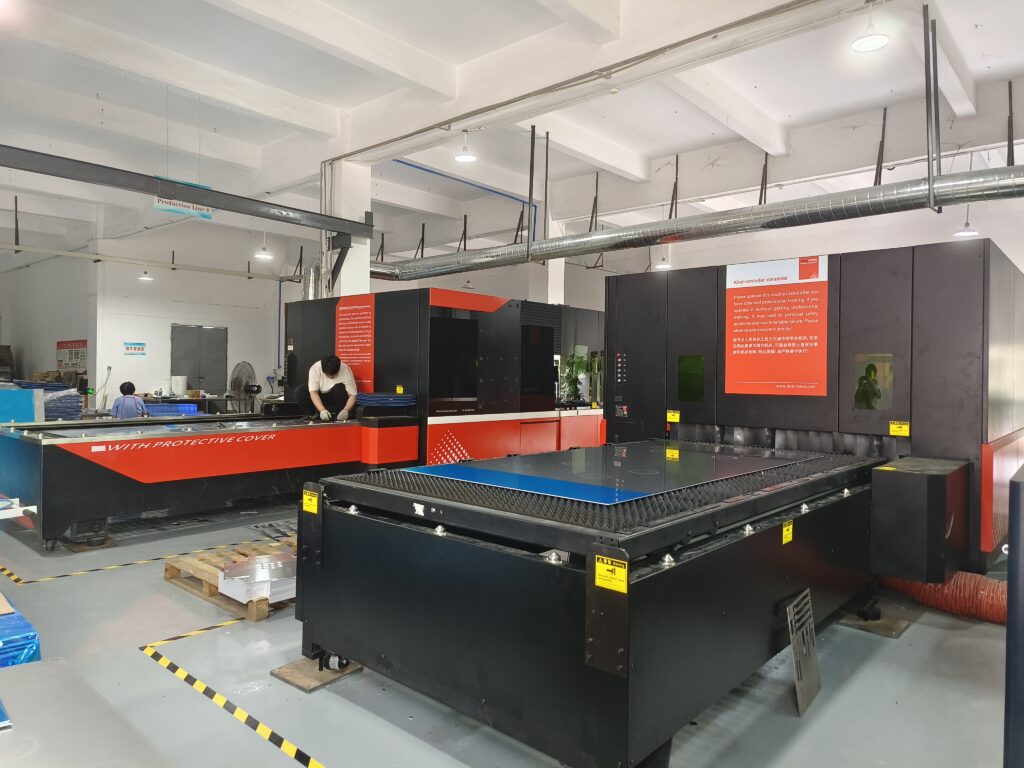
- Laser cutting
- CNC punching
- CNC bending
- Welding
- Hardware insertion
- Surface finishing
- Final assembly
This approach improves consistency and shortens overall project timelines.
Reliable Quality Control
Prototype parts should accurately reflect production intent.
Important quality measures include:
- Dimensional inspection
- Weld quality verification
- Assembly testing
- Surface finish inspection
Consistent quality ensures testing results are meaningful and repeatable.
Welding Options for Sheet Metal Prototypes
Different applications require different welding methods.
Laser Welding
Laser welding is commonly used when precision and appearance are priorities.
Advantages:
- Small heat-affected zone
- Minimal distortion
- Clean weld appearance
- Fast processing speed
Typical applications include electronic enclosures, medical devices, and precision assemblies.
TIG Welding
TIG welding is often selected for projects that require stronger joints.
Advantages:
- High weld strength
- Excellent penetration
- Suitable for stainless steel and aluminum
Common applications include structural frames, industrial equipment, and heavy-duty assemblies.
Spot Welding
Spot welding offers an efficient solution for joining overlapping sheet metal components.
Advantages:
- Fast production speed
- Low thermal distortion
- Cost-effective assembly
It is widely used in chassis manufacturing, brackets, and automotive components.
Applications Across Industries
Sheet metal prototype fabrication supports a broad range of industries.
Medical Equipment
Medical device manufacturers use sheet metal prototypes for equipment housings, carts, mounting systems, and diagnostic enclosures.
Industrial Automation
Automation companies rely on custom control cabinets, machine guards, operator panels, and robotic support structures.
Electronics
Electronic equipment often requires lightweight enclosures with precise cutouts, mounting points, and EMI shielding features.
Automotive
Automotive development teams use prototypes to evaluate battery enclosures, cooling systems, brackets, and structural components before production tooling is approved.
Sheet Metal Prototyping vs. Hard Tooling
Choosing the right manufacturing method depends on project goals.
For early-stage development, sheet metal prototyping offers several advantages:
- No tooling investment
- Faster turnaround
- Easier design revisions
- Lower risk during validation
Hard tooling becomes more economical when production volumes increase significantly. However, most successful products go through multiple prototype iterations before reaching that stage.
For this reason, many manufacturers use sheet metal prototypes to validate designs before committing to production tooling.
Conclusion
Sheet Metal Prototype Fabrication helps companies shorten development cycles, improve design accuracy, and reduce production risks. By testing real materials in real-world conditions, engineering teams can make informed decisions before investing in expensive tooling and large production runs.
At VOK, we combine precision sheet metal processing, advanced welding capabilities, and strict quality control to deliver prototypes that accurately represent production intent. Whether you need a single prototype, functional validation samples, or low-volume production parts, our team can help turn your design into a reliable finished product faster and more efficiently.