Laser cutting sheet metal helps you produce accurate metal components for prototypes, equipment housings, brackets, panels, and other custom applications. However, choosing a fabrication supplier involves more than cutting a flat sheet. You also need to consider material selection, bending accuracy, welding distortion, finishing requirements, and how each part will fit into your final assembly.
VOK PRECISION TECHNOLOGY Co., LTD provides sheet metal fabrication services for engineers, product developers, and businesses that need custom components. With over 20 years of industry experience, a team of more than 200 staff, a 3,000 m² production base, and over 5,000 projects per year, VOK supports product development from prototypes to low-volume and larger-scale production. Its capabilities include cutting, bending, punching, welding, riveting, and surface finishing.
What Does Laser Cutting Sheet Metal Involve?
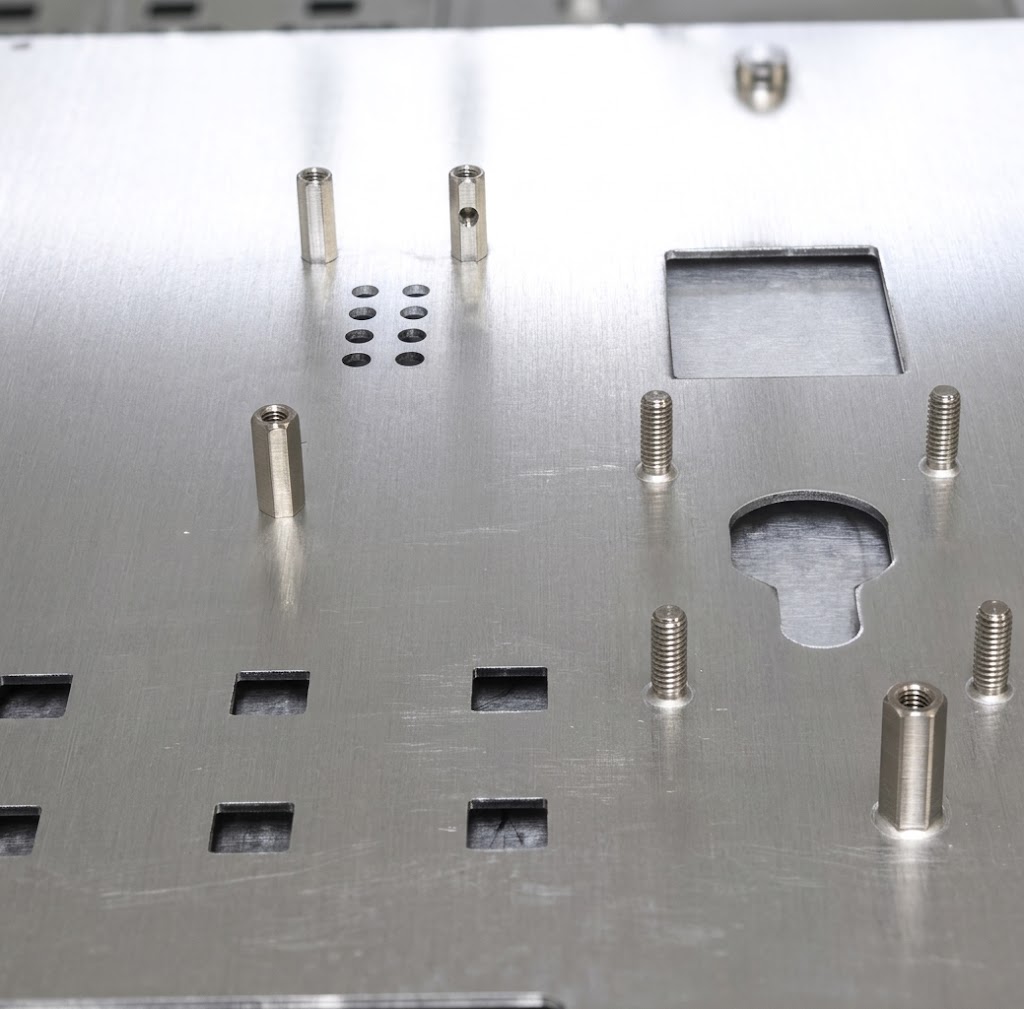
Laser cutting uses a focused laser beam to cut metal sheets according to digital design files. It allows manufacturers to create defined profiles, slots, holes, and intricate contours without relying on dedicated cutting dies for every design.
For your project, laser cutting can support:
- Custom brackets and mounting plates for machinery and automation equipment.
- Electronic enclosures and metal panels that require accurately positioned openings.
- Prototype components for checking dimensions, assembly, and product functionality.
- Low-volume production parts when design flexibility matters.
- Custom metal components that require further bending, welding, drilling, or finishing.
The final result depends on material type, sheet thickness, part geometry, cutting parameters, and the required edge quality. Therefore, share your drawings and specifications before production so your supplier can assess manufacturability.
Materials for Custom Sheet Metal Fabrication
VOK works with several metal materials to accommodate different mechanical, environmental, and appearance requirements.
| Material | Typical application considerations |
|---|---|
| AL5052 aluminum | Lightweight panels, brackets, and enclosures |
| Stainless steel | Components requiring corrosion resistance and a clean finish |
| Cold-rolled steel | General fabrication and formed metal parts |
| Hot-rolled steel | Applications where material thickness and structural requirements guide selection |
| Galvanized steel | Components requiring a protective zinc coating |
| Copper and zinc | Specialized electrical, functional, or decorative components, depending on design requirements |
Your material choice affects cutting performance, bending behavior, welding methods, and finishing costs. For example, stainless steel may suit an enclosure exposed to moisture, while AL5052 can be appropriate when reducing component weight is important.
Choosing the Right Sheet Metal Processing Method
Laser cutting is only one stage of a complete fabrication workflow. The appropriate combination of processes depends on your design, functional requirements, and production volume.
| Process | Main purpose | Key consideration |
|---|---|---|
| Laser cutting | Creates profiles, holes, and openings | Material thickness, geometry, and edge quality |
| Bending | Forms angles and three-dimensional shapes | Bend radius, material behavior, and springback |
| TIG welding | Joins metal components | Weld strength, heat input, and distortion |
| Spot welding | Joins selected contact areas | Joint design and required structural strength |
| Riveting | Mechanically joins components | Fastener position and accessibility |
| Powder coating | Adds a protective and decorative finish | Surface preparation and coating coverage |
Laser welding can provide precise, localized joining, while TIG welding supports applications requiring strong, controlled welds. Both require suitable joint design and process parameters. Spot welding can reduce thermal distortion in appropriate applications, although it does not replace a full-penetration weld where the design requires one.
VOK also offers painting, polishing, plating, and powder coating, together with finishing operations such as tapping and PEM nut installation.
How to Order Laser-Cut Sheet Metal Parts
A structured process helps you reduce design revisions and avoid unnecessary manufacturing costs.
- Prepare your design files. Provide 2D drawings or 3D CAD files, including dimensions, tolerances, hole locations, and assembly interfaces.
- Specify material and thickness. Identify the required metal grade, sheet thickness, and any performance or environmental requirements.
- Confirm secondary operations. Indicate whether the parts need bending, drilling, welding, riveting, tapping, or surface finishing.
- Review manufacturability. Ask the engineering team to assess bend clearances, weld access, feature placement, and potential production challenges.
- Confirm inspection requirements. Identify critical dimensions, cosmetic expectations, and any first-article or dimensional inspection requirements relevant to your project.
- Approve the production plan. Review the quotation, sample requirements, finishing specifications, and delivery schedule before authorizing production.
This workflow is particularly useful when you are developing a new product and need to validate fit, function, and manufacturability before committing to higher production volumes.
Why Work with VOK for Sheet Metal Prototyping?
VOK combines sheet metal fabrication with broader product development and manufacturing services. This gives you a single supplier to discuss related requirements such as CNC machining, 3D printing, vacuum casting, rapid tooling, and injection molding.
With over 1,000 global clients and tens of thousands of completed projects, VOK has experience supporting customers across automotive, medical, aerospace, electronics, and automation industries.
When evaluating a supplier, consider these factors:
- Process coverage: Can the supplier coordinate cutting, forming, joining, and finishing?
- Engineering support: Can the team identify design issues before production?
- Production flexibility: Can the supplier support prototypes and low-volume orders as well as larger runs?
- Quality planning: Are inspection criteria and acceptance requirements clearly defined?
- Communication: Can you confirm specifications, costs, and schedules before production begins?
VOK provides these manufacturing capabilities, while project-specific tolerances, certifications, inspection methods, and delivery commitments should be confirmed during quotation.
Frequently Asked Questions
1. What files do you need for laser cutting sheet metal?
Provide a dimensioned 2D drawing and, where available, a 3D CAD model. Include material grade, thickness, critical tolerances, finishing requirements, and any assembly details.
2. Can VOK manufacture sheet metal prototypes and small batches?
Yes. VOK specializes in rapid prototyping, precision machining, and low-volume production, and offers sheet metal fabrication for product development and manufacturing projects. Confirm the required quantity and design details to determine the appropriate process.
3. What affects the cost of laser-cut metal parts?
Material, thickness, cutting complexity, quantity, tolerances, secondary operations, and finishing all influence cost. Providing complete drawings and consolidating related operations can help your supplier prepare a more accurate quotation.
Conclusion
Choosing the right laser cutting sheet metal partner means looking beyond the cutting process. Material selection, bending, welding, finishing, and inspection all influence the quality and manufacturability of your final components. VOK PRECISION TECHNOLOGY Co., LTD combines sheet metal fabrication with prototyping and low-volume manufacturing expertise to support projects from initial design through production.
Request a Sheet Metal Fabrication Quote
Send your drawings, material specifications, required quantity, and finishing preferences to inquiry@vokmodel.com or call +86 18124139075. VOK team can review your requirements and discuss a suitable manufacturing approach for your next sheet metal project.