Quando hai bisogno di prototipi funzionali in tempi rapidi, gli utensili tradizionali possono creare costi e ritardi inutili. Colata sotto vuoto per la prototipazione rapida ti offre una pratica alternativa abbinando stampi in silicone, materiali poliuretanici, e lavorazione sottovuoto controllata. È possibile produrre prototipi altamente dettagliati e piccole serie di produzione senza investire in costosi stampi a iniezione.
Presso VOK PRECISION TECHNOLOGY Co., LTD, è possibile utilizzare la fusione sottovuoto come parte di un flusso di lavoro di produzione rapida più ampio. Con 20+ anni di esperienza nel settore, 200+ personale, una base produttiva di 3.000㎡, e più di 5,000 progetti all'anno, VOK supporta ingegneri e sviluppatori di prodotti nel settore automobilistico, medico, aerospaziale, elettronica, e applicazioni di automazione.
Perché utilizzare la fusione sotto vuoto per la prototipazione rapida?
La fusione sottovuoto funziona particolarmente bene quando è necessario qualcosa di più di un modello visivo. Può riprodurre dettagli fini, texture superficiali, e caratteristiche funzionali da un modello principale mantenendo i costi degli utensili relativamente bassi.
Il processo utilizza uno stampo in silicone anziché uno stampo a iniezione convenzionale. Di conseguenza, puoi passare da un modello master finito a parti prototipo in un ciclo di sviluppo molto più breve.
Potresti trarre vantaggio dalla fusione sotto vuoto quando ne hai bisogno:
- Prototipi funzionali per test di prodotto
- Produzione in piccoli lotti prima della produzione di massa
- Parti prototipali multiple con geometria coerente
- Diverse proprietà dei materiali o finiture superficiali
- Forme complesse che richiedono una riproduzione dettagliata
- Investimento in attrezzature inferiore rispetto allo stampaggio a iniezione
Per esempio, un team di ingegneri automobilistici può utilizzare parti fuse sotto vuoto per valutare un componente interno prima di impegnarsi nella produzione di attrezzature. Allo stesso modo, un'azienda di elettronica può produrre prototipi di custodie per l'assemblaggio e il test di adattamento.
Come funziona la fusione sottovuoto per la prototipazione rapida
Un risultato affidabile inizia con un modello master accurato e un processo di realizzazione dello stampo controllato. VOK combina la stampa 3D o la lavorazione CNC con la fusione sotto vuoto per creare un pratico flusso di lavoro del prototipo.
Fare un passo 1: Creare il modello principale
Innanzitutto è necessario un modello master accurato. A seconda dei requisiti di progettazione e tolleranza, puoi crearlo tramite stampa 3D o lavorazione CNC.
Il modello master determina la precisione dimensionale e i dettagli della superficie trasferiti sullo stampo in silicone.
Fare un passo 2: Preparare lo stampo in silicone
Una volta completato il modello principale, VOK prepara lo stampo in silicone attorno al modello. Lo stampo deve catturare la geometria richiesta consentendo allo stesso tempo la rimozione sicura della fusione finita.
Questa fase è importante quando la parte contiene sottosquadri, pareti sottili, o caratteristiche complesse.
Fare un passo 3: Eseguire la fusione sotto vuoto
Il materiale di colata selezionato viene miscelato e versato nello stampo in silicone sotto vuoto. La lavorazione sotto vuoto aiuta a ridurre l'aria intrappolata e supporta una distribuzione del materiale più uniforme.
È inoltre necessario controllare la miscelazione dei materiali, temperatura, tempo di stagionatura, e condizioni di vuoto per ottenere risultati stabili.
Fare un passo 4: Rimuovere e completare la parte
Dopo la polimerizzazione, la parte fusa viene rimossa dallo stampo in silicone. VOK può quindi eseguire l'elaborazione finale in base ai requisiti del progetto.
A seconda dell'applicazione, potresti aver bisogno di un taglio, finitura superficiale, pittura, o altra post-elaborazione prima del test o dell'assemblaggio.
Colata sotto vuoto vs. Stampaggio ad iniezione
Entrambe le tecnologie possono produrre componenti in plastica, ma servono diverse fasi dello sviluppo del prodotto.
| Fattore | Colata sottovuoto | Stampaggio ad iniezione |
|---|---|---|
| Utensileria | Stampo in silicone | Stampo di produzione |
| Costo iniziale dell'attrezzatura | Inferiore | Più alto |
| Velocità di sviluppo | Veloce | Preparazione degli utensili più lunga |
| Volume di produzione | Prototipi e piccoli lotti | Produzione da media a massiva |
| Convalida del progetto | Eccellente | Meglio per la produzione finale |
| Opzioni materiali | ABS-, PC-, POM-, Opzioni tipo PP ed elastomero | Ampia gamma di materiali di produzione |
| La migliore applicazione | Sviluppo e validazione del prodotto | Produzione su larga scala |
Perciò, la fusione sottovuoto ha più senso quando è necessario convalidare un progetto prima di effettuare un investimento significativo in attrezzature di produzione.
Principali vantaggi della colata sotto vuoto VOK
VOK si concentra sui requisiti pratici che devi affrontare durante lo sviluppo del prodotto: costo, velocità, precisione, e selezione dei materiali.
Precisione e dettaglio
Il processo di colata sottovuoto di VOK può raggiungere una tolleranza dichiarata di circa ±0,20 mm per 100 mm, a seconda della geometria del pezzo, materiale, progettazione di stampi, e condizioni di lavorazione.
Ciò rende il processo idoneo ai controlli dimensionali, valutazione dell'assemblaggio, e test funzionali del prototipo.
Utensili a basso costo
Gli stampi in silicone richiedono generalmente un investimento iniziale inferiore rispetto agli stampi a iniezione. Questo ti offre un percorso più economico quando il tuo progetto richiede solo un numero limitato di parti.
È particolarmente utile durante la fase iniziale dello sviluppo, quando le modifiche al design sono ancora possibili.
Versatilità dei materiali
È possibile selezionare materiali con proprietà simili alle plastiche e agli elastomeri di uso comune, comprese opzioni simili a:
- ABS
- computer
- POM
- PP
- Gomma
- Silicone
Questa flessibilità consente di valutare diverse caratteristiche meccaniche ed estetiche prima della produzione finale.
Tempi di consegna rapidi
Gli stampi in silicone in genere possono essere preparati in pochi giorni, a seconda della complessità della parte e dei requisiti del progetto. Perché eviti gli strumenti di produzione convenzionali, puoi abbreviare il percorso dalla progettazione del prototipo alla convalida fisica.
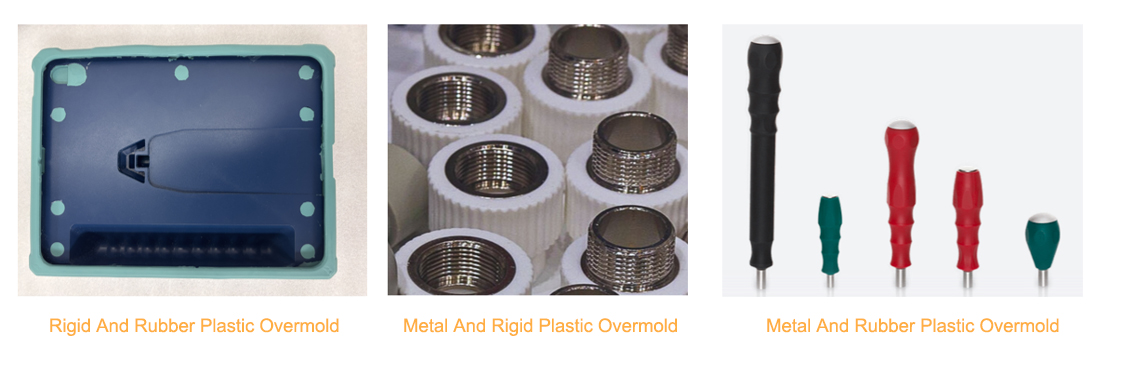
Sovrastampo per colata sotto vuoto per prototipi complessi
Se il tuo prototipo combina materiali o componenti diversi, il sovrastampo per colata sotto vuoto può fornire un'altra opzione utile.
VOK supporta diverse configurazioni di sovrastampaggio, compreso:
- Sovrastampaggio in plastica rigida e gomma
- Sovrastampaggio di metallo e plastica rigida
- Sovrastampaggio metallo e plastica gomma
- Inserire il sovrastampaggio
Ad esempio, potresti aver bisogno di una custodia rigida con impugnatura in gomma morbida per un prodotto elettronico portatile. Invece di testare i componenti separatamente, il sovrastampaggio consente di valutare la loro interazione come un unico prototipo.
Perché scegliere VOK per la prototipazione rapida?
VOK PRECISION TECHNOLOGY Co., LTD ha completato decine di migliaia di progetti per più di 1,000 clienti globali. Le sue capacità produttive coprono la lavorazione CNC, Tornitura CNC, 3Stampa D, fabbricazione di lamiere, colata sotto vuoto, attrezzaggio rapido, e stampaggio ad iniezione.
Questa funzionalità integrata ti consente di spostarti tra i processi di produzione man mano che il tuo progetto si sviluppa. VOK mantiene inoltre pratiche documentate di certificazione e controllo della qualità, con le informazioni sulla certificazione disponibili attraverso le proprie risorse aziendali.
Domande frequenti
La fusione sotto vuoto è adatta per la produzione in piccoli lotti?
SÌ. La fusione sotto vuoto è particolarmente utile quando è necessaria una quantità limitata di parti funzionali prima di passare alla produzione di massa. Gli utensili in silicone mantengono l'investimento iniziale inferiore rispetto allo stampaggio a iniezione convenzionale.
Quali materiali possono essere utilizzati per la fusione sotto vuoto?
Le opzioni comuni includono materiali poliuretanici progettati per simulare l'ABS, computer, POM, PP, gomma, e proprietà simili al silicone. La scelta del materiale dovrebbe dipendere dalla resistenza richiesta, flessibilità, aspetto, e applicazione.
Quanto sono precise le parti fuse sotto vuoto?
VOK specifica una tolleranza di circa ±0,20 mm per 100 mm. I risultati effettivi dipendono dalle dimensioni della parte, geometria, progettazione di stampi, caratteristiche del materiale, e controllo del processo.
Conclusione
Quando hai bisogno di parti dettagliate senza i costi e i tempi di consegna delle attrezzature di produzione, fusione sotto vuoto per la prototipazione rapida fornisce un percorso pratico dalla convalida del progetto alla produzione in piccoli lotti. Con materiali flessibili, utensili in silicone, preparazione rapida dello stampo, e circa ±0,20 mm per 100 Tolleranza dichiarata mm, puoi testare l'idoneità, funzione, aspetto, e assemblaggio prima di impegnarsi nella produzione di massa. VOK PRECISION TECHNOLOGY Co., LTD combina la fusione sotto vuoto con la lavorazione CNC, 3Stampa D, fabbricazione di lamiere, attrezzaggio rapido, e stampaggio ad iniezione, offrendoti un partner di produzione completo per lo sviluppo di prototipi.
CTA
Inviare VOK il tuo file CAD 3D, disegni, quantità richiesta, preferenza materiale, e dettagli dell'applicazione. Il team può esaminare le tue esigenze e consigliare un servizio di fusione sotto vuoto adatto per il tuo prototipo o progetto di produzione a basso volume.